


ASE Food Products, a brand of Al Shaye EXIM LLP, is a professionally managed B2B export company delivering 100% fresh and premium-quality food products from India to international markets. We partner with global importers, wholesalers, distributors, ...
- asefoodproducts@gmail.com
- No :5 , West Side , Azeez Nagar , Pattur, Mangadu, , Chennai, Tamil Nadu, India. 600017
© 2020 AL SHAYE EXIM LLP. All Rights Reserved
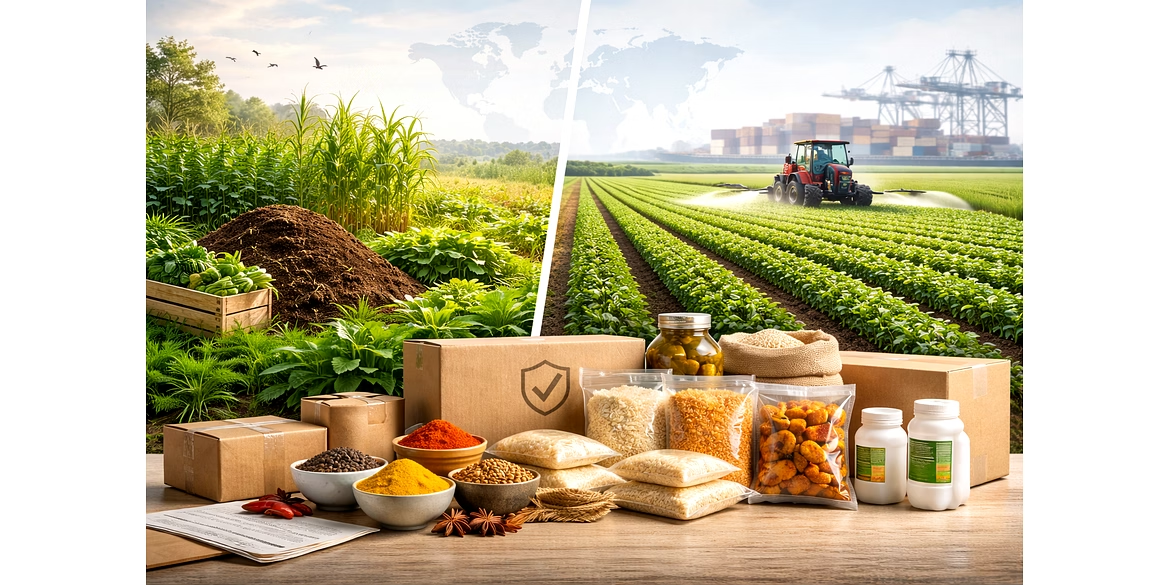

As global demand for safe, sustainable, and responsibly sourced food continues to rise, importers are increasingly evaluating how farming practices affect product quality, compliance, and consumer acceptance. Understanding the difference between natural farming and conventional farming is essential for making informed sourcing decisions in today’s global food trade.
What Is Natural Farming?
Natural farming emphasizes environmentally responsible cultivation with minimal chemical intervention. This approach focuses on soil health, natural inputs, and ecological balance, making it attractive for sustainability-driven food importers and premium markets.
• Limited or no use of synthetic fertilizers and pesticides
• Use of organic inputs and natural soil enhancers
• Emphasis on soil fertility and biodiversity
• Lower environmental impact
• Growing preference in health- and eco-conscious markets
Natural farming aligns well with importers targeting organic, clean-label, and sustainability-focused consumers.
What Is Conventional Farming?
Conventional farming focuses on maximizing crop yield and consistency through the use of modern agricultural inputs and techniques. It is widely practiced for large-scale food production and global supply chains.
• Use of chemical fertilizers and pesticides
• Higher productivity and yield consistency
• Widely practiced for large-scale food supply
• Easier scalability for bulk demand
• Common in price-sensitive markets
While efficient and cost-effective, conventional farming often faces increased scrutiny regarding environmental impact and chemical residue levels in certain markets.
Key Differences Between Natural and Conventional Farming
1. Farming Inputs
Natural farming relies on organic manures, compost, and biological pest control, while conventional farming uses chemical-based fertilizers and pesticides to enhance growth and control pests.
• Natural: Organic manures, compost, bio-inputs
• Conventional: Chemical fertilizers, pesticides
2. Food Safety & Residue Levels
Chemical residue compliance is a key factor for food importers and regulatory authorities.
• Natural farming generally results in lower chemical residues
• Conventional farming may require residue testing and compliance checks
• Importers must align with destination country regulations
3. Environmental Impact
Environmental sustainability is increasingly influencing food import policies and buyer preferences.
• Natural farming supports soil health and biodiversity
• Conventional farming may contribute to soil degradation over time
• Sustainability policies increasingly favor natural farming methods
4. Market Demand & Consumer Preference
Consumer awareness directly affects importer sourcing strategies and product positioning.
• Natural products appeal to premium and eco-conscious markets
• Conventional products serve mass-market demand
• Importers may balance both based on target segments
5. Pricing & Commercial Considerations
Cost structures vary significantly between natural and conventional farming methods.
• Natural farming may involve higher production costs
• Conventional farming often offers more competitive pricing
• Importers must weigh cost against brand positioning
Which Farming Method Should Importers Choose?
The right farming method depends on market demand, regulatory requirements, and long-term brand strategy.
• Choose natural farming for premium, organic, and sustainability-driven markets
• Choose conventional farming for large-volume, cost-sensitive markets
• Many importers adopt a hybrid sourcing strategy
Exporters like ASE Food Products, a brand of Al Shaye EXIM LLP, support importers with both farming options based on compliance standards and market needs.
Why Farming Practices Matter in Global Food Trade
• Impact on import approvals and inspections
• Influence on consumer trust and brand value
• Alignment with sustainability regulations
• Support for long-term agricultural sustainability
Frequently Asked Questions (FAQs)
Is natural farming the same as organic farming?
Not always. Natural farming emphasizes minimal chemical use and ecological balance, while organic farming follows certified standards and regulations.
Do natural farming products cost more?
In many cases, yes. Higher production costs are often offset by premium pricing and stronger sustainability positioning.
Are conventional farming products safe to import?
Yes, provided they meet destination country food safety and residue standards.
Can importers source both methods?
Yes. Many importers source both natural and conventional products depending on market demand and pricing strategy.