


ASE Food Products, a brand of Al Shaye EXIM LLP, is a professionally managed B2B export company delivering 100% fresh and premium-quality food products from India to international markets. We partner with global importers, wholesalers, distributors, ...
- asefoodproducts@gmail.com
- No :5 , West Side , Azeez Nagar , Pattur, Mangadu, , Chennai, Tamil Nadu, India. 600017
© 2020 AL SHAYE EXIM LLP. All Rights Reserved
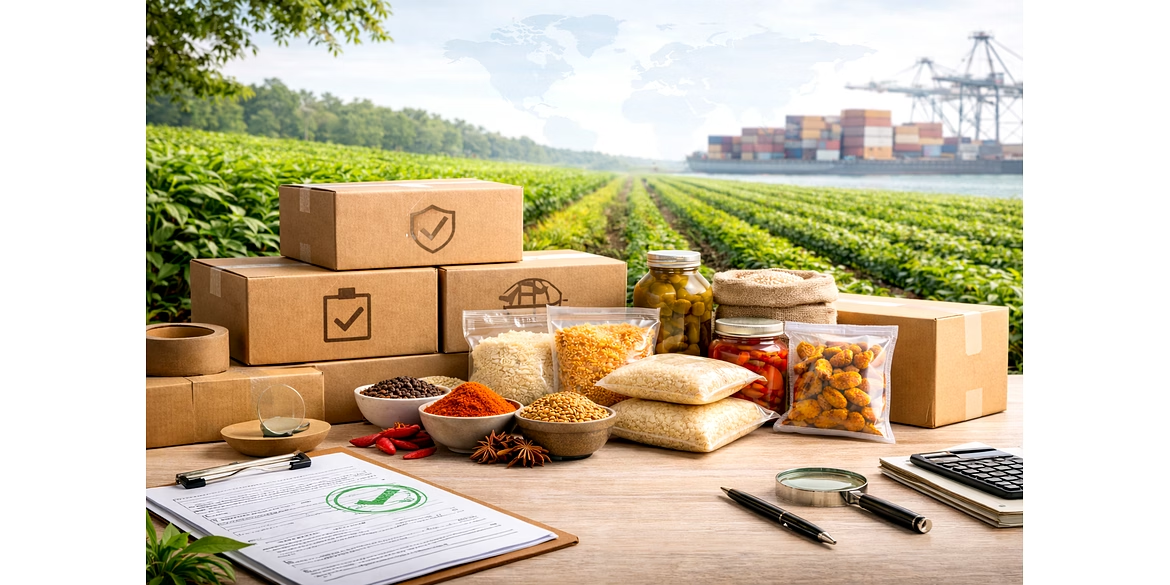

Food safety is a non-negotiable requirement in global food trade. Importers rely on exporters not only for product supply but also for strict adherence to food safety standards that protect consumers, brands, and businesses. Understanding what food safety practices to expect from an exporter helps importers reduce risk, maintain compliance, and build long-term sourcing partnerships.
Farm-Level Food Safety Controls
Food safety begins at the source. Exporters should maintain strong oversight of farming practices to ensure safe, compliant, and traceable food products from the very first stage of production.
• Sourcing from verified and trusted farms
• Monitoring cultivation and harvesting methods
• Controlled use of approved agricultural inputs
• Emphasis on hygiene during harvesting
• Traceability from farm to export stage
Strong farm-level controls help prevent contamination at the earliest stage and support downstream food safety compliance.
Hygienic Handling & Processing
Proper handling and processing are essential to maintaining food safety throughout the export supply chain. Exporters must follow strict hygiene protocols to protect product integrity.
• Clean and sanitized processing facilities
• Use of food-grade tools and equipment
• Trained staff following hygiene protocols
• Controlled environments to prevent contamination
• Separation of raw and processed products
Hygienic processing safeguards food safety and supports compliance with international standards.
Quality Checks & Safety Inspections
Regular quality and safety inspections are a core responsibility of exporters to ensure only compliant products are shipped to international markets.
• Visual and physical inspections
• Product grading and sorting
• Monitoring for contamination or spoilage
• Compliance with destination country standards
• Removal of non-compliant products
These inspections reduce the risk of shipment rejection and protect importer operations.
Compliance with Food Safety Regulations
Exporters must demonstrate a strong understanding of international food safety laws and destination-country import regulations.
• Compliance with import country food laws
• Knowledge of permitted ingredients and limits
• Adherence to labeling and packaging regulations
• Preparation of required health and safety certificates
Regulatory compliance is essential for smooth customs clearance and market access.
Export-Grade Packaging & Labeling
Packaging plays a critical role in maintaining food safety during storage, transit, and delivery.
• Food-safe and contamination-resistant packaging
• Packaging designed to preserve freshness
• Proper labeling with product details
• Compliance with destination country requirements
High-quality packaging protects food quality and importer brand reputation.
Documentation & Traceability
Transparent documentation and traceability systems are essential for accountability and food safety assurance.
• Accurate export documentation
• Traceability records for sourcing and processing
• Availability of health or phytosanitary certificates
• Consistency between documents and shipped goods
Strong traceability builds importer confidence and supports rapid issue resolution.
Cold Chain & Storage Management (Where Applicable)
For perishable food products, proper cold chain management is essential to maintain safety and freshness.
• Temperature-controlled storage
• Careful handling during loading and transit
• Continuous monitoring to prevent spoilage
• Coordination with logistics partners
Effective cold chain management preserves product quality until final delivery.
Continuous Monitoring & Improvement
Food safety standards evolve, and exporters must continuously improve systems and practices to meet global expectations.
• Regular review of food safety procedures
• Ongoing staff training programs
• Process improvements based on audits and feedback
• Alignment with global best practices
Exporters like ASE Food Products, a brand of Al Shaye EXIM LLP, focus on continuous improvement to meet international buyer expectations.
Why These Practices Matter to Importers
• Reduces the risk of shipment rejection
• Ensures regulatory compliance
• Protects brand reputation
• Supports consistent and reliable sourcing
• Builds long-term supplier trust
Frequently Asked Questions (FAQs)
Why are food safety practices critical in food imports?
Food safety practices ensure products are safe for consumption, compliant with regulations, and protected from contamination throughout the supply chain.
How can importers verify an exporter’s food safety practices?
Importers can review documentation, request certifications, conduct audits, and work with transparent exporters.
Do food safety requirements differ by country?
Yes. Food safety regulations vary by destination country, product type, and risk category.