


ASE Food Products, a brand of Al Shaye EXIM LLP, is a professionally managed B2B export company delivering 100% fresh and premium-quality food products from India to international markets. We partner with global importers, wholesalers, distributors, ...
- asefoodproducts@gmail.com
- No :5 , West Side , Azeez Nagar , Pattur, Mangadu, , Chennai, Tamil Nadu, India. 600017
© 2020 AL SHAYE EXIM LLP. All Rights Reserved
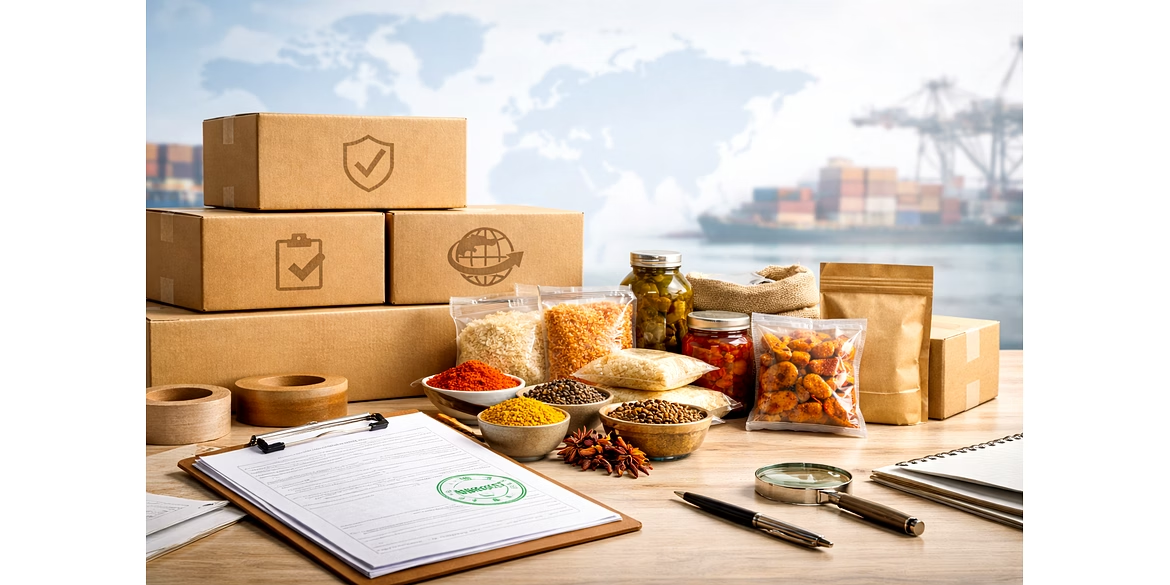

Importing food products from India requires accurate documentation to ensure smooth customs clearance, regulatory compliance, and timely delivery. Understanding import documents in advance helps international buyers reduce risk, avoid delays, and maintain consistent supply. This guide outlines the key documents required for importing food products from India in a clear, practical format for global importers.
Why Documentation Is Critical in Food Imports
Food imports are highly regulated across global markets. Proper food import documentation ensures imported goods are safe, traceable, and compliant with destination-country requirements, while supporting faster customs clearance and smoother logistics.
• Ensures customs clearance without delays
• Confirms food safety and quality compliance
• Helps avoid penalties, rejections, or shipment holds
• Builds trust between importer and exporter
Working with experienced exporters such as ASE Food Products, a brand of Al Shaye EXIM LLP, can improve documentation accuracy and reduce compliance risks.
Key Documents Required for Importing Food Products from India
The documents below are commonly required to import food products from India. The exact list may vary by product type (fresh vs. processed), destination regulations, and shipping method (air vs. sea), so it’s best to confirm requirements before dispatch.
1. Commercial Invoice
The commercial invoice is the primary document used by customs authorities to assess the shipment value, calculate duties and taxes, and confirm product classification.
• Exporter and importer details
• Product description and HS code
• Quantity, unit price, and total value
• Payment terms and currency
• Country of origin
2. Packing List
The packing list provides a detailed breakdown of how the goods are packed and supports customs inspection, warehouse receiving, and logistics verification.
• Number of packages or cartons
• Net and gross weight
• Packaging type
• Product-wise breakdown
• Marks and identification numbers
3. Certificate of Origin
The certificate of origin certifies that the food products originate from India and is often required for customs clearance and tariff determination.
• Issued by authorized trade bodies
• Required for customs clearance in many markets
• Helps determine import duties and tariffs
• Mandatory for certain trade benefits and agreements
4. Bill of Lading / Airway Bill
This shipping document is issued by the carrier and serves as proof of shipment and a transport contract. It is essential to release cargo upon arrival.
• Proof of shipment and cargo receipt
• Contract between exporter and carrier
• Required for cargo release
• Bill of Lading (sea) or Airway Bill (air)
5. Health Certificate
A health certificate confirms that the food products are safe for human consumption and meet applicable hygiene and safety standards. This is commonly required for processed food imports.
• Issued by authorized authorities
• Verifies hygiene and safety standards
• Mandatory for many processed food categories
• Supports destination-country food safety regulations
6. Phytosanitary Certificate
A phytosanitary certificate is typically required for fresh fruits, vegetables, grains, and other plant-based food products. It confirms that the shipment is free from pests and diseases.
• Confirms products are free from pests and diseases
• Issued by government-approved agencies
• Essential for agricultural and fresh produce imports
• Mandatory in most global markets for applicable products
7. Food Safety & Quality Certificates (If Applicable)
Depending on the product and destination, additional food safety certification or quality documentation may be required to demonstrate compliance and support import approval.
• Food safety compliance certificates
• Quality assurance documentation
• Product-specific approvals
• Import permits (where applicable)
8. Insurance Certificate
The insurance certificate covers risks during transit and may be required under certain trade terms. It provides added security for importers when shipping food products internationally.
• Protection against damage or loss
• Required under certain trade terms
• Provides financial security for importers
9. Importer-Specific or Country-Specific Documents
Some destination countries require additional documents based on local regulations, product categories, and labeling standards. Confirm these requirements early to avoid clearance delays.
• Import licenses or permits
• Product registration documents
• Label approval certificates
• Regulatory authority clearances
Best Practices to Reduce Documentation Risks
Documentation errors are a leading cause of customs delays in food imports. A proactive approach helps importers reduce compliance risk and maintain consistent supply from India.
• Confirm document requirements before shipment
• Work with exporters experienced in international food compliance
• Ensure document accuracy and consistency across invoice, packing list, and shipping papers
• Maintain proper record-keeping for traceability and audits
• Coordinate with customs brokers early for destination-country rules
Frequently Asked Questions (FAQs)
What are the mandatory documents to import food products from India?
The most common mandatory documents include a commercial invoice, packing list, certificate of origin, and bill of lading or airway bill. Health or phytosanitary certificates may be required depending on the product type.
Are documentation requirements the same for all countries?
No. Documentation requirements vary by destination country, product type, and local food import regulations.
Who issues the health and phytosanitary certificates in India?
These certificates are issued by authorized government or regulatory bodies approved for food and agricultural exports.
Is a certificate of origin mandatory for food imports?
In many cases, yes. It is commonly required for customs clearance and to determine applicable duties, tariffs, and trade benefits.
Can exporters help with documentation preparation?
Yes. Experienced exporters can prepare and coordinate required export documents and help ensure accuracy for smoother clearance.
What happens if documents are incorrect or missing?
Incorrect or missing documents can lead to customs delays, fines, shipment holds, rejection, or return of goods.
Do processed and fresh food products require different documents?
Yes. Fresh products often require phytosanitary certificates, while processed foods usually require health certificates and additional food safety documentation.
How can importers reduce documentation-related risks?
Reduce risk by working with reliable exporters, understanding destination regulations, and verifying all documents before shipment departure.
Accurate paperwork is the foundation of successful food importing. With the right exporter support, correct documentation, and early compliance planning, importers can reduce customs delays and build dependable supply from India.